
Plaintiffs Rights to Film CME in Brevard County and Why APVisuals Is the Smart Choice
A compulsory medical examination can feel like one of the most uneven parts of a personal injury case. The plaintiff is asked to appear for an exam requested by the defense, often with a doctor they did not choose, in a setting they do not control. That is exactly why filming matters.
In Brevard County, plaintiffs and their attorneys often look at video as a way to keep the process accurate, calm, and fair. A well-recorded CME can show what actually happened in the room, including the questions asked, the tests performed, the time spent, and the tone of the interaction.
This article is for general information only. It is not legal advice. Florida law, local practice, and court orders can affect what is allowed in any specific case, so plaintiffs should always follow their attorney’s guidance.

Why plaintiffs often have the right to film a CME
In Florida civil cases, a compulsory medical examination is usually governed by Florida Rule of Civil Procedure 1.360. It allows one side to request a medical examination when a party’s physical or mental condition is in controversy.
Although people often call it an “independent medical examination,” many plaintiff attorneys prefer “compulsory medical examination” because the exam is requested by the opposing side and is part of litigation. The plaintiff is not choosing the doctor for treatment. The doctor is evaluating the plaintiff for the case.
Florida courts have generally recognized that plaintiffs may have a third party present at these exams, which can include a videographer, unless the defense shows a valid reason to limit or prevent it. The exact terms can depend on the judge, the case facts, the exam type, and the wording of the court order.
That means the safest approach is clear and practical:
Discuss filming with the plaintiff’s attorney early.
Give proper notice when required.
Confirm whether the scheduling notice, agreement, or court order allows video.
Follow any limits set by the judge.
Use a videographer who knows how to stay quiet, neutral, and out of the way.
In Brevard County, as in the rest of Florida, the court’s order controls. If there is a dispute over filming, the lawyers may need to bring the issue to the judge before the exam date. A plaintiff should not show up assuming every detail has been handled. The right to record is strongest when counsel has addressed it in advance.
Filming is not about disrupting the exam. It is about preserving an accurate record of what occurs.
The benefits of filming a compulsory medical examination
A CME can become a major part of a personal injury claim. The defense doctor may later issue a report, give deposition testimony, or testify at trial. If the exam was not recorded, everyone may have to rely on notes, memory, and competing descriptions.
Video reduces that uncertainty.
Video creates an objective record
A recording can show the length of the exam, the physical tests used, and the instructions given. It can also show whether the doctor performed certain tests or skipped them.
That matters because medical evaluations can be highly detailed. A small difference in how a range-of-motion test was performed, how long an orthopedic exam lasted, or whether the plaintiff was asked about pain during movement can become important later.
A video record gives attorneys and experts something concrete to review.
Video can reduce misunderstandings
CME reports often summarize what the plaintiff said. If a plaintiff later believes a statement was taken out of context, the video can help determine what was actually said.
For example, a plaintiff may describe being able to perform a household task only with pain, breaks, or help from someone else. If a written report shortens that answer, the meaning can change. Video helps preserve the full exchange.
Video encourages a more careful process
Most professionals act more carefully when they know the process is being documented. A camera can promote a respectful, by-the-book exam. That does not mean the video is hostile or confrontational. A good videographer should not make the room feel tense.
The goal is quiet accountability.
Video helps attorneys prepare
A recorded CME can help the legal team compare the report with the actual exam. It can also help prepare for depositions, mediation, or trial.
Attorneys may look at:
Whether the doctor’s report matches the recorded exam.
Whether the examination stayed within the allowed scope.
Whether the plaintiff’s answers were accurately reflected.
Whether physical tests were performed properly.
Whether the doctor’s later testimony is consistent with the video.
For plaintiffs, this can provide peace of mind. The exam is no longer just a memory. It is preserved.

What should happen during the CME and filming
A filmed CME should feel orderly. Everyone should know their role before the exam starts. The plaintiff is there to participate in the examination. The doctor is there to conduct the evaluation. The videographer is there to document, not direct.
Before the exam begins
The plaintiff’s attorney should confirm the exam details, including location, time, doctor, type of exam, and any rules about recording. If the videographer needs to sign in, show identification, or follow a facility policy, that should be planned ahead.
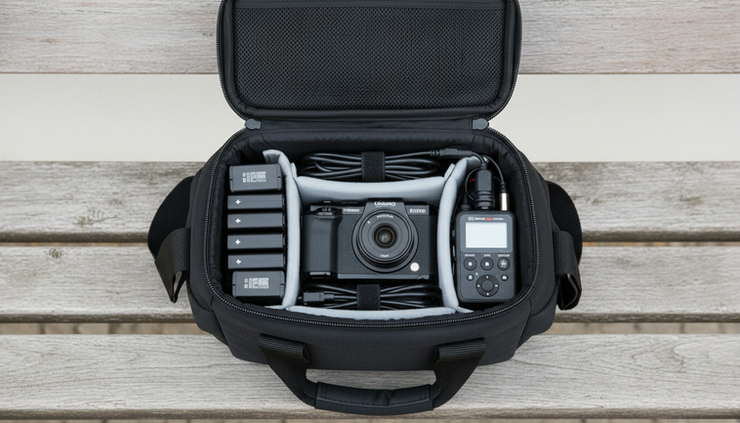
A professional videographer should arrive early enough to set up without delaying the exam. The equipment should be simple and reliable. In most CME settings, that means a camera, tripod, audio capture when appropriate, backup batteries, and storage media.
The videographer should choose a location that captures the exam clearly while staying out of the doctor’s working space. The camera should not block movement, interfere with equipment, or make the plaintiff’s exam harder.
During the exam
The plaintiff should answer questions honestly and follow reasonable instructions. If a movement causes pain, the plaintiff should say so. If they cannot perform a test, they should explain why without exaggeration.
The videographer should remain quiet. They should not coach the plaintiff, answer questions, argue with the examiner, or interrupt the exam. If an attorney or representative is present, that person’s role will depend on the court order and Florida practice. In many situations, they may observe and protect the record, but they should also avoid interfering with the medical evaluation.
The recording should capture:
The doctor’s questions and instructions.
The plaintiff’s answers.
Physical testing and measurements.
Breaks or pauses.
Any refusal to perform a test and the reason given.
Statements about pain, limitations, or symptoms.
The start and end of the exam.
If the doctor asks questions outside the agreed scope, the attorney may need to address that based on the court order. The videographer should not make that legal call.
After the exam
After the CME ends, the video should be saved securely. The file should not be casually edited, filtered, or altered. If clips are needed later, the original should still be preserved.
Fast delivery matters here. Attorneys may need to review the video quickly, especially if a report comes in soon after the exam or a deposition is approaching.
That is one reason a 24-hour turnaround can make a real difference.

What plaintiffs and attorneys should avoid during a filmed CME
A video record is most useful when the exam stays clean and professional. Problems can arise when someone treats the filming as a confrontation.
Plaintiffs should avoid:
Arguing with the examiner.
Guessing when they do not know an answer.
Exaggerating symptoms.
Performing movements beyond their real ability.
Refusing reasonable exam steps without explanation.
Talking to the camera instead of responding to the doctor.
Videographers should avoid:
Interrupting the doctor.
Giving instructions to the plaintiff.
Moving around the room unnecessarily.
Recording private information beyond what is needed.
Creating distractions with lights, sounds, or bulky gear.
Offering legal opinions.
The best CME video often looks simple. It is steady, clear, well-framed, and complete. Nothing about the recording should give the defense a reason to claim the camera changed the exam.
A skilled legal videographer protects the usefulness of the video by staying professional from arrival to delivery.
Why APVisuals is a smart choice for Brevard County CME filming
Filming a CME is different from filming a wedding, a commercial, or a social media clip. The videographer must understand that the recording may become part of a legal case. Details matter. Neutrality matters. Reliability matters.
APVisuals brings the kind of experience that attorneys and plaintiffs need when the exam is important and the process has to go smoothly.
Experience with sensitive legal settings
CME filming requires calm judgment. The videographer must know where to stand, when to adjust, and when to stay completely still. They must capture clear audio and video without becoming part of the event.
APVisuals understands that this is not a creative shoot where the videographer directs the scene. The job is to document the exam as it happens.
That experience helps reduce stress for the plaintiff and helps attorneys trust the final product.
Arts training that improves the final record
Arts training may sound like a bonus, but it matters in legal video. Composition, framing, lighting, and sound are not just artistic choices. They affect whether the video is easy to review and useful later.
A poorly framed video may miss the plaintiff’s movement. Bad audio may make key answers hard to hear. Shaky footage may distract from the facts.
APVisuals uses visual training to create a clear, stable record. The goal is not to make the exam dramatic. The goal is to make it understandable.
24-hour turnaround when time matters
Legal teams often work under tight deadlines. A fast video turnaround can help attorneys review the CME while the details are still fresh.
APVisuals offers 24-hour turnaround of video, which can help when counsel needs to compare the recording with the doctor’s report, prepare for a deposition, or address a dispute about what occurred.
Speed only helps if the work is reliable. APVisuals focuses on both.
Local videographers make the Brevard County process smoother
APVisuals now has local videographers in the area, making CME filming in Brevard County easier to schedule and manage. Local coverage can reduce travel delays, improve availability, and make day-of coordination simpler.
For plaintiffs and attorneys, that means fewer moving parts. A local videographer can arrive prepared, understand the timing, and handle the recording without adding stress to an already serious appointment.
Whether the CME is in Melbourne, Palm Bay, Titusville, Cocoa, Merritt Island, Viera, or another nearby community, having local support can make the process feel more controlled from the start.
A filmed CME should protect the record, not complicate the exam
The strongest CME video is often the one nobody has to argue about. It shows what happened. It captures the questions, the answers, the tests, and the timing. It does not interfere. It does not coach. It does not turn the exam into a performance.
For plaintiffs in Brevard County, filming a compulsory medical examination can provide clarity and protection during a part of litigation that may otherwise feel one-sided. When handled correctly, video helps attorneys evaluate the defense exam with confidence.
APVisuals is built for that kind of work. With legal video experience, arts-based visual training, fast 24-hour turnaround, and local videographers now available in the area, APVisuals gives plaintiffs and attorneys a smoother way to document a CME from start to finish.
A compulsory exam may be required, but an unclear record does not have to be.


Comments